
Is Robotic Knee Replacement Better Than Traditional Knee Surgery?
Knee pain can make simple activities like walking, climbing stairs, sitting, and standing difficult. When medicines and physiotherapy no longer provide relief, knee replacement surgery may be considered.
Today, patients can choose between traditional knee replacement and robotic knee replacement. Many people ask, “Is robotic knee replacement better?”
The answer depends on your knee condition. Robotic surgery offers advanced planning and precision with the support of MAKO Smart Robotics Technology.
At Prabhukrupa Hospital, our experienced orthopedic specialists use advanced technology to provide personalized knee replacement care and help patients return to daily activities with confidence.
What is Knee Replacement Surgery?
Knee replacement surgery is a common orthopedic procedure used to treat severe knee pain, joint damage, and difficulty in movement. During the surgery, the damaged parts of the knee joint are removed and replaced with artificial implants. The main goal of knee replacement surgery is to reduce pain, improve knee movement, and help patients return to their normal daily activities.
Osteoarthritis is one of the most common reasons for knee replacement surgery. It occurs when the cartilage inside the knee gradually wears away, causing pain, stiffness, swelling, and difficulty while walking. When these symptoms become severe and affect daily life, knee replacement surgery may be recommended to improve knee function and provide long-term relief.
Rheumatoid arthritis can also cause serious damage to the knee joint. It may lead to ongoing pain, swelling, stiffness, and reduced movement. If medicines, physiotherapy, and other treatments are no longer providing enough relief, knee replacement surgery may be considered to reduce discomfort and improve mobility.
A serious knee injury can damage the bones, cartilage, or other structures of the joint. Sometimes, this damage can become worse over time and make normal activities difficult. In such cases, knee replacement surgery may help restore better knee function and make walking and other daily movements easier.
Severe damage to the bones around the knee can also affect normal joint movement and cause constant pain. When the damaged areas make walking, standing, or performing daily activities difficult, an orthopedic specialist may recommend knee replacement surgery after a detailed examination and evaluation of the knee.
Chronic knee pain can make simple activities such as walking, climbing stairs, sitting down, or getting up from a chair difficult. When pain continues for a long time and non-surgical treatments do not provide enough relief, knee replacement surgery may be considered to reduce pain and improve overall mobility.
Severe knee joint stiffness can reduce flexibility and make everyday movements uncomfortable or difficult. For suitable patients, knee replacement surgery can help improve joint movement, reduce stiffness, and make daily activities easier. An orthopedic specialist can determine whether knee replacement is the right treatment based on the patient’s condition and overall health.
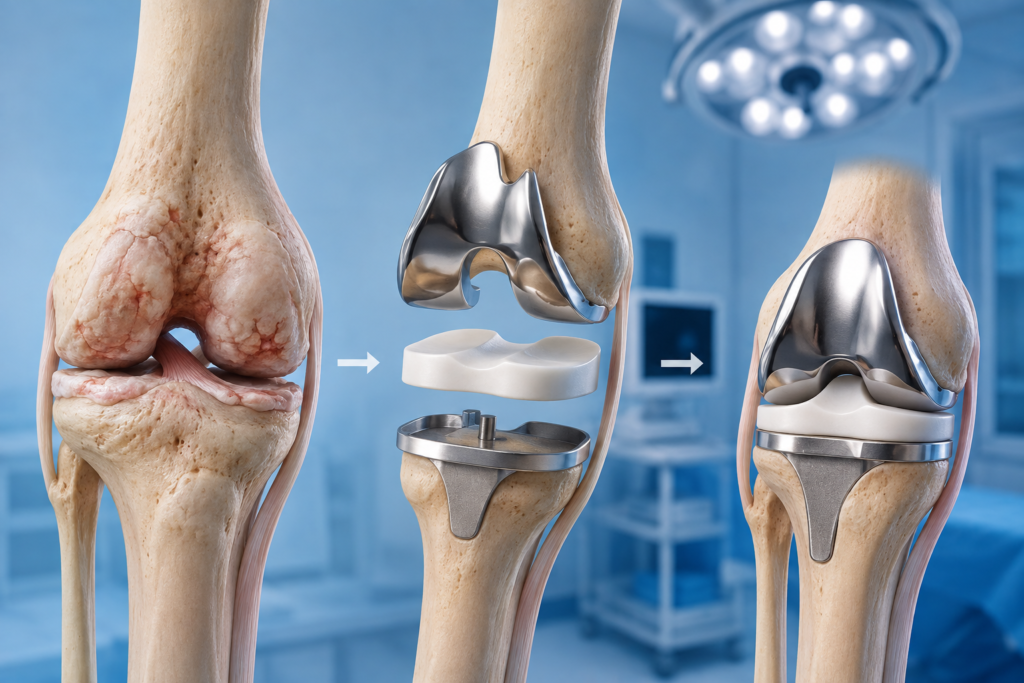
What is Traditional Knee Replacement Surgery?
Traditional knee replacement surgery is a well-known and widely performed treatment for people with severe knee pain and joint damage. It has been used successfully for many years and can help patients reduce pain and improve their ability to walk and perform daily activities. This type of surgery is usually considered when medicines, physiotherapy, exercise, and other non-surgical treatments are no longer providing enough relief.
During traditional knee replacement surgery, the orthopedic surgeon first carefully examines the damaged knee and plans the procedure. During the operation, the damaged cartilage and a small amount of damaged bone are removed from the knee joint. The surgeon then prepares the bone surfaces and places artificial components, known as knee implants, to create a new smooth joint. These implants are designed to help the knee move more easily and reduce pain caused by damaged bone and cartilage.
Traditional knee replacement surgery mainly depends on the surgeon’s experience, skill, and use of standard surgical instruments. The surgeon uses measurements, X-rays, and manual techniques to decide how much bone needs to be removed and how the implant should be positioned. Proper alignment and correct implant placement are very important because they can affect how the new knee feels and works after surgery.
One of the major benefits of traditional knee replacement is that it is a well-established procedure with a long history of successful results. Many patients with advanced knee arthritis have experienced significant pain relief and improved mobility after this surgery. However, every patient’s knee is different, so the results can depend on factors such as the condition of the knee, the patient’s overall health, the type of implant used, and the experience of the orthopedic surgeon.
After traditional knee replacement surgery, proper recovery and rehabilitation are also very important. Patients are usually guided through physiotherapy and specific exercises to improve knee strength, flexibility, and movement. With regular physiotherapy, proper rest, and following the surgeon’s instructions, many patients can gradually return to their normal daily activities.
In simple words, traditional knee replacement surgery is a proven treatment that replaces a damaged knee joint with an artificial implant using standard surgical methods. It can provide excellent results for many patients when the surgery is properly planned and performed by an experienced orthopedic team.
What is Robotic Knee Replacement Surgery?
Robotic knee replacement surgery is an advanced form of knee replacement treatment that uses modern technology to help orthopedic surgeons perform the procedure with greater accuracy. It is especially useful for patients who have severe knee arthritis, joint damage, or long-term knee pain that affects their daily life. The main goal of robotic knee replacement is to provide accurate surgical planning, proper implant positioning, and better knee function.
It is important to understand that a robot does not perform the surgery by itself. The orthopedic surgeon remains in complete control throughout the procedure. The robotic system works as an advanced support tool that provides the surgeon with detailed information and real-time guidance during different steps of the surgery. This combination of experienced orthopedic care and robotic technology helps the surgeon make more precise decisions during the operation.
At Prabhukrupa Hospital, robotic knee replacement is performed using the advanced MAKO Smart Robotics System. This technology helps the orthopedic team create a personalized surgical plan based on the patient’s individual knee structure. Since every person’s knee is different, this personalized approach can help the surgeon plan the procedure according to the patient’s specific needs.
1. 3D Knee Planning
Before robotic knee replacement surgery, a detailed 3D model of the patient’s knee can be created using CT scan information. This gives the surgeon a clear view of the knee’s bone structure and helps in understanding the level of joint damage.
2. Personalized Robotic Knee Surgery Planning
With robotic knee replacement technology, the surgeon can plan the surgery before entering the operating room. The plan can be adjusted according to the patient’s knee shape, bone condition, and joint alignment. This makes the procedure more personalized rather than using the same approach for every patient.
3. Accurate Bone Preparation
During robotic knee surgery, the robotic system provides real-time guidance to help the surgeon prepare the damaged areas of the knee accurately. It can help the surgeon remove the required amount of damaged bone while aiming to preserve healthy bone whenever possible.
4. Precise Knee Implant Placement
Correct knee implant positioning is an important part of successful knee replacement surgery. Robotic technology helps the surgeon plan the position and alignment of the implant with high precision. Proper implant placement can support better knee movement and function after surgery.
5. Protection of Healthy Tissues
Another important advantage of MAKO robotic knee replacement is that the technology can help the surgeon work within the planned surgical area. This may help preserve healthy bone and surrounding soft tissues whenever possible. The surgeon can also make adjustments during surgery based on the patient’s individual knee condition.
6. Surgeon Remains in Complete Control During Robotic Knee Replacement
Many patients think that robotic surgery means a machine performs the operation. This is not true. In robotic-assisted knee replacement, the orthopedic surgeon performs the actual surgery and controls the robotic system. The technology simply provides additional information, guidance, and precision to support the surgeon during the procedure.
Overall, robotic knee replacement surgery combines advanced technology with the experience of an orthopedic surgeon. At Prabhukrupa Hospital, the use of MAKO SmartRobotics™ System helps our orthopedic team provide personalized surgical planning and precise knee replacement treatment. The aim is to help suitable patients reduce knee pain, improve movement, and return to their daily activities with greater confidence.
How Does MAKO Robotic Knee Replacement Work?
MAKO robotic knee replacement is a carefully planned procedure that combines the experience of an orthopedic surgeon with advanced robotic technology. The process is designed around the patient’s individual knee condition instead of following exactly the same plan for every patient.
The MAKO Smart Robotics System helps the surgeon understand the knee in detail, plan the procedure, and perform the surgery with greater precision. However, the surgeon remains in complete control throughout the operation.
Step 1: Detailed Knee Assessment for Robotic Knee Surgery
The first step in robotic knee replacement surgery is a detailed examination of the patient’s knee. The orthopedic surgeon checks the patient’s knee pain, movement, joint condition, and overall health. A CT scan may also be used to create a detailed 3D model of the knee, which helps the surgeon understand the patient’s bone structure, joint damage, and alignment. This detailed assessment allows the doctor to understand the exact condition of the knee and prepare a treatment plan based on the patient’s individual needs.
Step 2: Personalized Surgical Planning with MAKO Technology
After the knee assessment, the surgeon creates a personalized knee replacement surgery plan using the MAKO Smart Robotics System. Every knee has a different shape and level of damage, so the surgical plan is created according to the patient’s specific knee structure. The surgeon can carefully plan the bone preparation, implant position, and knee alignment before the surgery. This personalized approach helps the orthopedic surgeon prepare for the procedure more accurately.
Step 3: Robotic Assistance During Knee Replacement Surgery
During MAKO robotic knee replacement, the orthopedic surgeon performs the surgery while the robotic system provides real-time guidance and information. The technology helps the surgeon prepare the damaged areas of the knee according to the planned treatment. It can help the surgeon remove the required damaged bone while aiming to preserve healthy bone and surrounding tissues whenever possible. The robotic system does not perform the surgery on its own—the surgeon remains in complete control and uses the technology as an advanced support tool during the procedure.
Step 4: Accurate Knee Implant Placement
Once the damaged parts of the knee have been prepared, the surgeon places the knee implant according to the personalized surgical plan. Accurate implant positioning and proper knee alignment are important for the function and stability of the new joint. MAKO technology provides the surgeon with detailed information during the procedure, helping with precise implant placement based on the patient’s individual knee structure. The aim is to create a well-balanced knee that can support comfortable movement after recovery.
Step 5: Checking Knee Balance and Movement
Before completing the robotic knee replacement surgery, the surgeon checks the knee’s balance, stability, and movement. The MAKO system can provide useful information that helps the surgeon evaluate the knee during the procedure and make adjustments when required. This step is important because a properly balanced knee can help support smooth movement and better function after surgery. The surgeon makes the final decisions based on the patient’s individual condition and the results during the operation.
Step 6: Recovery After MAKO Robotic Knee Replacement
After MAKO robotic knee replacement surgery, the recovery process begins with guidance from the orthopedic team. Patients are usually encouraged to start gentle movement and physiotherapy as advised by their doctor. Exercises can help improve knee strength, flexibility, and movement, while regular follow-up visits help the doctor monitor recovery. Recovery time can vary from patient to patient depending on age, health, knee condition, and rehabilitation. At Prabhukrupa Hospital, our orthopedic team supports patients throughout their treatment journey, from detailed assessment and robotic surgery to physiotherapy and follow-up care.
Benefits of Robotic Knee Replacement Surgery
Robotic knee replacement offers several benefits because it combines advanced technology with the experience of an orthopedic surgeon. The MAKO Smart Robotics System helps the surgeon with detailed planning, accurate bone preparation, and precise implant positioning. Here are some important benefits of robotic knee replacement surgery.
1. Higher Accuracy with Robotic Knee Replacement
One of the main benefits of robotic knee replacement is improved surgical accuracy. The MAKO system uses detailed information about the patient’s knee to help the surgeon plan the procedure and position the implant accurately. Better implant positioning can support proper knee function, stability, and comfortable movement after surgery.
2. Less Damage to Healthy Bone and Tissue
During MAKO robotic knee surgery, the surgeon can carefully plan the area that needs treatment. The technology helps the surgeon work within the planned area and remove the damaged bone while aiming to preserve healthy bone and surrounding tissues whenever possible. Preserving healthy structures can be an important part of achieving good knee function after knee replacement surgery.
3. Better Knee Alignment
Proper knee alignment is an important part of successful joint replacement. If the implant is not properly aligned, it can affect the way the knee moves and may cause extra stress on the joint. Robotic-assisted technology provides the surgeon with detailed information and guidance to help achieve the planned alignment based on the patient’s individual knee structure.
4. Less Pain After Robotic Knee Surgery
Many patients want to know whether robotic knee replacement can reduce pain after surgery. Robotic technology may help the surgeon work more precisely and protect surrounding tissues when possible. This can support a more comfortable recovery for suitable patients. However, the amount of pain after surgery can vary depending on the patient’s health, age, knee condition, and individual recovery.
5. Faster and Smoother Recovery After Robotic Knee Surgery
Another potential benefit of robotic knee replacement surgery is a smoother recovery process. Many patients are encouraged to start moving and walking with support soon after surgery, depending on their condition. Early movement, regular physiotherapy, proper rest, and following the doctor’s instructions are important for recovery. The exact recovery time is different for every patient.
6. Better Implant Positioning with MAKO Smart Robotics System
Correct knee implant placement is important for the long-term function of a replacement knee. Robotic technology helps the surgeon plan and perform implant positioning according to the patient’s knee structure. Proper placement may help reduce unnecessary stress and wear on the implant and can support good long-term knee function.
7. Improved Knee Movement
After robotic knee replacement, the goal is to help patients achieve better knee movement and return to their normal activities. Accurate surgical planning and proper implant positioning can support the natural movement and balance of the knee. With proper physiotherapy and rehabilitation, patients can gradually improve their strength, flexibility, and confidence while walking.
8. Better Surgical Precision in Robotic-Assisted Knee Replacement
The advanced planning and precision offered by MAKO robotic knee replacement may help reduce certain risks associated with inaccurate implant positioning. The technology provides the surgeon with real-time information during the procedure, allowing the surgical plan to be followed more precisely. However, like every major surgery, knee replacement still has possible risks, and the outcome depends on the patient’s health, surgeon’s experience, hospital care, and recovery process.
Is Robotic Knee Replacement Safer?
Yes, robotic knee replacement is a safe and advanced treatment option for suitable patients when performed by an experienced orthopedic surgeon. Before surgery, the doctor checks the patient’s overall health and knee condition to plan the treatment safely. The MAKO Smart Robotics Technology supports the surgeon with detailed planning, real-time guidance, accurate bone preparation, and precise implant positioning, while the surgeon remains fully in control. Proper hospital facilities, an experienced surgical team, and regular physiotherapy and follow-up care also play an important role in a safe recovery. At Prabhukrupa Hospital, we combine experienced orthopedic care with advanced robotic technology to provide personalized knee replacement treatment.
Who is the Right Candidate for Robotic Knee Replacement?
Robotic knee replacement may be suitable for patients who have severe knee damage and whose pain or limited movement is affecting their daily life. However, robotic surgery is not right for everyone. An experienced orthopedic surgeon will examine your knee and overall health before recommending the right treatment.
1. Severe Knee Arthritis and Bone-on-Bone Damage
Patients with severe knee arthritis or bone-on-bone damage may be suitable candidates for robotic knee replacement. When the protective cartilage in the knee becomes badly worn, the bones can rub against each other and cause pain, stiffness, swelling, and difficulty moving. If the condition becomes severe, knee replacement may be considered.
2. Long-Term Knee Pain
People suffering from chronic knee pain for a long time may need an evaluation for knee replacement. If pain continues despite medicines, physiotherapy, exercises, or other treatments, it can affect walking, sleeping, working, and daily activities. In such cases, an orthopedic specialist can check whether robotic knee surgery may be suitable.
3. Difficulty Walking or Climbing Stairs
If knee arthritis makes walking and climbing stairs difficult, it may indicate advanced joint damage. Patients may experience pain, stiffness, or weakness while walking even for short distances. When these problems start affecting normal activities, robotic knee replacement may be considered after a detailed examination.
4. Non-Surgical Treatments Are No Longer Helping
Doctors usually try non-surgical knee treatment before recommending surgery. This may include medicines, physiotherapy, exercises, weight management, and other suitable treatments. If these options do not provide enough relief and knee pain continues to affect your quality of life, the doctor may recommend knee replacement.
5. Knee Pain Is Affecting Quality of Life
Patients whose knee pain affects their quality of life may benefit from discussing knee replacement with an orthopedic specialist. If pain prevents you from enjoying activities such as walking, travelling, exercising, or spending time with family, it may be time to consider advanced treatment options. At Prabhukrupa Hospital, our orthopedic specialists carefully evaluate each patient before recommending MAKO robotic knee replacement based on their individual knee condition and overall health.
Tips for a Faster Recovery After Robotic Knee Replacement
A good recovery after robotic knee replacement surgery depends on more than just the surgery. Following your doctor’s instructions, doing regular exercises, eating healthy food, and taking proper care of your new knee can help support a smoother recovery. Regular physiotherapy after knee replacement is one of the most important parts of recovery. Your physiotherapist will guide you through exercises that help improve knee strength, flexibility, balance, and movement. It is important to do these exercises regularly as advised and avoid extra exercises without your doctor’s approval.
Walking is also an important part of robotic knee replacement recovery. Your orthopedic team will guide you about when and how much you should walk based on your condition. You may start with support if needed and slowly increase your walking as your strength improves. During the early recovery period, avoid putting too much pressure on the knee and follow your doctor’s advice about daily activities.
A healthy diet can support your body during knee surgery recovery. Include nutritious foods that provide protein, vitamins, minerals, and other essential nutrients. Drinking enough water also helps keep your body hydrated. Maintaining a healthy weight can reduce extra pressure on the new knee and support better mobility. Along with a healthy diet, take all knee replacement medicines exactly as prescribed by your doctor. Do not stop or change any medicine without medical advice.
During knee replacement recovery, it is also important to avoid activities that put unnecessary stress on your new knee. Follow your doctor’s instructions about lifting, bending, using stairs, exercising, and other daily activities. Regular follow-up after robotic knee replacement is equally important because your orthopedic surgeon can check your healing, knee movement, and overall progress. These appointments also allow you to discuss any pain, swelling, stiffness, or difficulty with movement. Following your complete treatment and rehabilitation plan can help you return to your daily activities safely and confidently.
Why More Patients Choose Robotic Knee Replacement
More patients are choosing robotic knee replacement surgery because it combines advanced technology with the experience of an orthopedic surgeon. Robotic technology helps provide better accuracy during surgical planning and implant positioning, while the treatment can be personalized according to each patient’s knee condition. It may also help the surgeon work more precisely around healthy bone and surrounding tissues. With accurate planning and proper implant placement, patients may experience comfortable movement and a smoother recovery. However, recovery is different for every patient and depends on factors such as age, health, knee condition, and rehabilitation. Overall, MAKO robotic knee replacement offers a modern approach to knee surgery by combining advanced technology, personalized treatment, and expert orthopedic care to help suitable patients reduce pain and improve their daily movement.
Why Choose Prabhukrupa Hospital for Robotic Knee Replacement?
Choosing the right hospital is one of the most important decisions for your treatment.
At Prabhukrupa Hospital, we are committed to providing advanced orthopedic care with modern technology and compassionate support.
Our orthopedic department is trusted by many patients because we focus on safe treatment, accurate diagnosis, and personalized care from consultation to recovery.
We offer advanced MAKO Smart Robotics Knee Replacement Surgery, which helps our orthopedic specialists perform highly precise procedures tailored to each patient’s knee. This technology supports better implant positioning, improved joint alignment, and a smoother recovery experience.
Our hospital provides complete orthopedic services under one roof, including expert consultations, digital diagnostics, advanced operation theatres, physiotherapy, rehabilitation, pain management, and continuous follow-up care. Every patient receives an individual treatment plan based on their age, lifestyle, and medical condition.
At Prabhukrupa Hospital, our goal is simple—to help you walk comfortably again, reduce pain, improve mobility, and restore your confidence so you can enjoy your daily life without knee pain.
Frequently Asked Questions (FAQs)
1. Is robotic knee replacement painful?
You may experience some pain after surgery, but it is managed with medicines and physiotherapy. Many patients report a comfortable recovery.
2. How long does robotic knee replacement surgery take?
The surgery usually takes around 1 to 2 hours, depending on the patient’s condition.
3. Is robotic knee replacement better than traditional surgery?
For many patients, robotic knee replacement offers better accuracy, improved implant placement, and a smoother recovery. However, the best option depends on your individual knee condition.
4. How long does a robotic knee implant last?
With proper care, modern knee implants often last 15–20 years or longer, though this varies from person to person.
5. Can elderly patients undergo robotic knee replacement?
Yes. Many older adults benefit from robotic knee replacement if they are medically fit for surgery.
6. When can I walk after robotic knee replacement?
Many patients begin walking with support within one or two days after surgery, depending on their recovery.
Final Thoughts
Both traditional knee replacement and robotic knee replacement are effective treatments for severe knee arthritis. However, robotic technology brings greater precision, personalized planning, and the potential for a faster, more comfortable recovery.
If knee pain is limiting your daily life, don’t wait for it to become worse. Early consultation can help you understand the best treatment option for your condition.
At Prabhukrupa Hospital, our experienced orthopedic specialists combine advanced MAKO Smart Robotics Technology with compassionate patient care to deliver safe, accurate, and successful knee replacement surgeries. Our mission is to help you regain pain-free movement, improve your quality of life, and get back to doing the things you love with confidence.