
Healthy Pregnancy with Yoga: Safe Exercises, Benefits & Expert Recommendations
Pregnancy is one of the most beautiful journeys in a woman’s life. Along with happiness and excitement, it also brings many physical and emotional changes. During these nine months, taking care of your body and mind becomes more important than ever.
One of the safest and most effective ways to stay healthy during pregnancy is prenatal yoga. Yoga is not about difficult poses or intense workouts. It is a gentle practice that helps improve flexibility, reduce stress, strengthen the body, and prepare for childbirth.
However, not every yoga pose is safe during pregnancy. That is why it is important to practice only safe pregnancy yoga exercises under expert guidance.
At the IVF Center at Prabhukrupa Hospital, we always encourage expecting mothers to follow healthy habits that support both the mother and the growing baby. In this blog, we will explain everything you need to know about healthy pregnancy with yoga, its benefits, safe exercises, and expert recommendations.
1. What is Prenatal Yoga?
Prenatal Yoga is a special type of yoga that is designed especially for pregnant women to support a healthy and comfortable pregnancy. Unlike regular yoga, prenatal yoga focuses on gentle movements, safe stretching, controlled breathing, and relaxation techniques that match the changing needs of a pregnant woman’s body. Every pose is carefully selected to protect both the mother and the baby, making it a safe way to stay active during pregnancy when practiced under the guidance of a doctor or a certified prenatal yoga instructor.
During pregnancy, a woman’s body goes through many physical and emotional changes as the baby grows. These changes can lead to back pain, muscle stiffness, poor posture, swelling, balance problems, tiredness, and stress. Practicing Prenatal Yoga regularly helps the body adjust to these changes by improving flexibility, strengthening important muscles, and reducing pressure on the back, hips, and joints. It also improves blood circulation, supports better posture, and makes everyday activities like walking, sitting, standing, and sleeping more comfortable throughout pregnancy.
Another important benefit of Prenatal Yoga during pregnancy is that it prepares both the body and mind for labor and childbirth. Gentle stretching, pelvic-opening exercises, and breathing techniques help improve muscle strength, body awareness, and endurance, which can be helpful during labor. Learning how to control your breathing and stay relaxed during yoga sessions can also help reduce fear, manage pain more effectively, and make the childbirth experience feel calmer and more manageable.
Prenatal Yoga is also highly beneficial for emotional well-being during pregnancy. Hormonal changes can sometimes cause stress, anxiety, mood swings, and difficulty sleeping. The deep breathing, mindfulness, and relaxation techniques used in prenatal yoga help calm the mind, reduce stress, improve sleep quality, and promote emotional balance. Regular practice also helps expecting mothers feel more confident, connected with their growing baby, and better prepared for the journey of motherhood. Rather than focusing on intense exercise or weight loss, Prenatal Yoga supports a healthier, safer, and more enjoyable pregnancy by caring for both the body and the mind.
2. Is Yoga Safe During Pregnancy?
Yes, Prenatal Yoga is generally safe during pregnancy when practiced correctly and under proper guidance. Most healthy pregnant women can safely perform prenatal yoga after consulting their gynecologist or healthcare provider. Since every pregnancy is different, your doctor can advise whether yoga is suitable for your specific condition. If you have a high-risk pregnancy or any medical complications, your doctor may recommend avoiding certain yoga poses or physical activities to ensure the safety of both you and your baby.
Before starting Pregnancy Yoga, always get your doctor’s approval and practice under the supervision of a certified prenatal yoga instructor who understands the needs of pregnant women. It is important to listen to your body and never force yourself into any pose that feels uncomfortable. If you experience pain, dizziness, shortness of breath, bleeding, contractions, or any unusual discomfort while practicing yoga, stop immediately and contact your doctor. With proper medical advice, expert guidance, and safe practice, prenatal yoga can be a healthy and beneficial way to stay active, relaxed, and prepared throughout your pregnancy journey.
3. Amazing Benefits of Yoga During Pregnancy
Practicing Prenatal Yoga during pregnancy offers many physical, mental, and emotional benefits. Regular yoga helps expecting mothers stay active, reduce common pregnancy discomforts, improve flexibility, and prepare for a healthier pregnancy and childbirth.
1. How Yoga During Pregnancy Helps Relieve Back Pain
As your baby grows, extra weight puts pressure on your lower back, causing pain and discomfort. Prenatal Yoga for back pain relief includes gentle stretches that improve posture, strengthen back muscles, and reduce pressure on the spine, helping you feel more comfortable throughout pregnancy.
2. Pregnancy Yoga Improves Flexibility and Body Movement
Pregnancy naturally affects your muscles, joints, and body movements. Prenatal Yoga for flexibility gently stretches the body, improves joint mobility, and makes daily activities like walking, sitting, standing, and changing positions much easier and more comfortable.
3. Prenatal Exercise Strengthens Muscles for Labor
One of the major benefits of Prenatal Yoga is strengthening the legs, hips, lower back, pelvic floor, and core muscles. Strong muscles provide better support during pregnancy and help prepare the body for labor and delivery.
4. Yoga for Pregnant Women Reduces Stress and Anxiety
Hormonal changes and pregnancy-related worries can sometimes increase stress and anxiety. Prenatal Yoga for stress relief combines deep breathing, meditation, and relaxation techniques that calm the mind, improve emotional well-being, and help mothers feel more relaxed.
5. Pregnancy Yoga Promotes Better Sleep
Many women experience difficulty sleeping because of body discomfort and hormonal changes. Prenatal Yoga for better sleep relaxes the muscles, reduces tension, and helps the mind stay calm, leading to deeper and more restful sleep.
6. Safe Yoga Exercises Help Reduce Pregnancy Swelling
Swelling in the feet, ankles, and hands is common during pregnancy. Safe Prenatal Yoga exercises improve blood circulation and encourage healthy fluid movement, which may help reduce swelling and improve overall comfort.
7. Breathing Techniques in Pregnancy Yoga Improve Oxygen Flow
As the baby grows, breathing may become more difficult. Prenatal Yoga breathing exercises teach deep and controlled breathing techniques that increase oxygen flow, improve lung capacity, and provide better oxygen supply for both the mother and the baby.
8. Prenatal Fitness Prepares Your Body for Childbirth
Regular Prenatal Yoga for labor preparation improves flexibility, muscle strength, endurance, and breathing control. These benefits help expecting mothers feel more confident and physically prepared for labor and delivery while supporting a smoother childbirth experience.
4. Best Safe Yoga Exercises During Pregnancy
Pregnancy is a beautiful journey, but it also brings many physical and emotional changes to a woman’s body. Practicing Prenatal Yoga can help expecting mothers stay active, reduce discomfort, and prepare both the body and mind for childbirth. However, every pregnancy is different, so it is important to practice yoga only after getting approval from your doctor or under the guidance of a certified prenatal yoga instructor. Below are some of the safest and most beneficial pregnancy yoga exercises that can support a healthy and comfortable pregnancy.
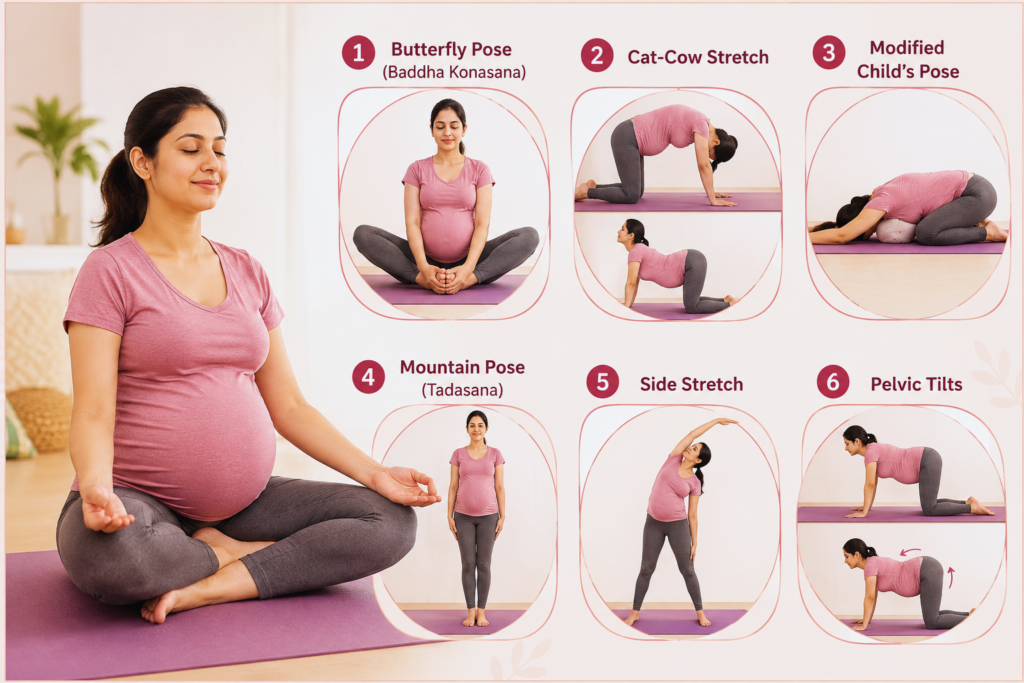
Notes:- Please perform all these yoga exercises only under expert
1. Butterfly Pose (Baddha Konasana): A Safe Prenatal Yoga Pose for Flexibility
The Butterfly Pose (Baddha Konasana) is one of the most recommended prenatal yoga poses because it gently stretches the hips, inner thighs, and pelvic muscles. During pregnancy, these areas become tighter as your body prepares for childbirth. Practicing this pose regularly can improve flexibility, reduce stiffness, and relieve lower back discomfort. It also helps increase blood circulation to the pelvic area and supports better posture while sitting. This pose is especially helpful during the later stages of pregnancy because it prepares the pelvis for labor and delivery. While performing this exercise, sit comfortably with the soles of your feet touching each other, keep your back straight, and avoid forcing your knees toward the floor. Move slowly, breathe deeply, and stop immediately if you feel any pain or discomfort.
2. Cat-Cow Stretch: Safe Prenatal Yoga Exercise for Back Pain Relief
The Cat-Cow Stretch is a gentle and safe yoga exercise that helps relieve one of the most common pregnancy problems—back pain. As your baby grows, extra weight places pressure on your spine and lower back, which can cause discomfort. This yoga movement gently stretches the spine, improves flexibility, and reduces muscle stiffness. It also strengthens the muscles that support your back, helping you maintain better posture throughout pregnancy. Practicing the Cat-Cow Stretch encourages smooth movement of the spine and improves blood circulation, making your body feel more relaxed. Perform this exercise slowly by moving your back gently with your breathing, without putting pressure on your abdomen. Regular practice can make everyday activities more comfortable and reduce pregnancy-related back pain.
3. Modified Child's Pose: Relaxing Prenatal Yoga for Stress Relief
The Modified Child’s Pose is a relaxing yoga posture that helps calm both the body and mind during pregnancy. Pregnancy can sometimes cause stress, anxiety, tiredness, and muscle tension, especially in the lower back and hips. This gentle pose allows your body to rest while encouraging slow, deep breathing that helps reduce stress and improve relaxation. It also gently stretches the back, hips, and thighs without putting pressure on your growing belly. If you feel uncomfortable, you can place a pillow, cushion, or yoga block under your chest or knees for extra support. This comfortable position helps expecting mothers feel more relaxed, improves breathing, and provides a peaceful moment for both mother and baby.
4. Mountain Pose (Tadasana): Prenatal Yoga for Better Balance and Posture
The Mountain Pose (Tadasana) may look simple, but it offers many important benefits during pregnancy. As your body changes and your baby grows, your center of balance shifts, making it more difficult to stand comfortably. This yoga pose helps improve posture, strengthen the legs, and increase body awareness. Standing correctly also reduces strain on the back, shoulders, and neck while improving overall balance and stability. Mountain Pose encourages you to stand tall with your shoulders relaxed and your weight evenly distributed on both feet. Practicing this pose regularly helps build strength and confidence while making everyday standing and walking easier during pregnancy.
5. Side Stretch: Pregnancy Yoga Exercise for Better Breathing and Flexibility
The Side Stretch is a gentle pregnancy yoga exercise that stretches the muscles along the sides of your body, including the ribs, waist, and shoulders. As your baby grows, the expanding uterus can make breathing feel more difficult because it places pressure on your lungs and ribs. Side stretching creates more space around the chest, allowing you to breathe more deeply and comfortably. It also reduces muscle tightness, improves flexibility, and helps relieve stiffness in the upper body. This exercise supports better posture and improves overall body movement during pregnancy. Move slowly, avoid overstretching, and focus on taking slow, deep breaths throughout the stretch.
6. Pelvic Tilts: Prenatal Yoga Exercise for Labor Preparation
Pelvic Tilts are one of the best prenatal yoga exercises for strengthening the lower back, abdominal support muscles, and pelvic floor. During pregnancy, many women experience lower back pain because of the extra weight carried in the front of the body. Pelvic Tilts gently strengthen these muscles while improving pelvic flexibility and reducing pressure on the lower back. This exercise also helps improve posture and may make labor and delivery more comfortable by preparing the pelvis for childbirth. Practice the movement slowly and gently without holding your breath or making sudden movements. Regular Pelvic Tilts can help improve comfort during pregnancy while supporting a smoother labor experience.
Overall, these safe Prenatal Yoga exercises can help improve flexibility, reduce pregnancy discomfort, strengthen important muscles, improve breathing, and prepare your body for childbirth. Always listen to your body, avoid pushing yourself beyond your comfort level, and consult your healthcare provider before starting or continuing any pregnancy yoga routine.
5. Yoga Poses to Avoid During Pregnancy
Although Prenatal Yoga during pregnancy is highly beneficial, some yoga poses are not considered safe for expecting mothers. These poses may put extra pressure on the growing baby, increase the risk of falls, or strain muscles and joints. Below are some Yoga Poses to Avoid During Pregnancy and the reasons why they should be avoided.
1. Avoid Deep Twists During Pregnancy
Deep twisting yoga poses put pressure on the abdomen and growing uterus, which may cause discomfort during pregnancy. Instead of deep twists, pregnant women should practice gentle open twists only if recommended by their prenatal yoga instructor.
2. Avoid Strong Backbends in Prenatal Yoga
Strong backbends overstretch the abdominal muscles and lower back, which are already under extra pressure during pregnancy. Safe Prenatal Yoga exercises focus on gentle stretching rather than intense backbends.
3. Avoid Headstands and Shoulder Stands During Pregnancy
Headstands and shoulder stands require excellent balance and stability. As pregnancy progresses, your center of gravity changes, increasing the risk of falls. These inversion poses are generally not recommended unless advised by an experienced prenatal yoga expert.
4. Avoid Hot Yoga During Pregnancy
Hot Yoga during pregnancy should be avoided because exercising in a heated room can raise your body temperature and lead to dehydration. Overheating is not considered safe for the health of both the mother and the baby.
5. Avoid Belly-Down Yoga Poses During Pregnancy
Yoga poses that require lying on your stomach become uncomfortable and unsafe as the baby grows. These poses place direct pressure on the abdomen and should be replaced with pregnancy-safe yoga poses designed for expecting mothers.
6. Avoid Jumping and High-Impact Yoga Movements
Jumping movements and fast transitions can increase pressure on the joints, pelvic area, and ligaments. During pregnancy, hormones naturally loosen the ligaments, making slow and controlled Prenatal Yoga exercises a much safer choice.
7. Avoid Intense Abdominal Exercises During Pregnancy
Exercises that heavily target the abdominal muscles, such as crunches or strong core workouts, can put unnecessary strain on the abdomen. Instead, Prenatal Yoga for pregnancy focuses on gentle core strengthening that safely supports the body throughout pregnancy.
6. Expert Recommendations for Healthy Pregnancy with Yoga
Health experts recommend practicing Prenatal Yoga as part of a healthy pregnancy routine rather than relying on it alone. Along with yoga, eating a balanced and nutritious diet is essential to provide the vitamins, minerals, and energy needed for both the mother and the growing baby. Drinking plenty of water and staying hydrated also helps support your overall health and reduces the risk of dehydration during pregnancy.
Getting enough sleep and taking proper rest are equally important because your body needs extra time to recover and support your baby’s development. Regular prenatal check-ups allow your doctor to monitor your pregnancy, track your baby’s growth, and identify any concerns early. If your doctor approves, a short daily walk can also improve blood circulation, increase energy levels, and help keep your body active.
Managing stress is another important part of a healthy pregnancy. Simple relaxation techniques, deep breathing exercises, and gentle prenatal yoga can help reduce anxiety, improve your mood, and promote better sleep. Staying calm and emotionally healthy benefits both the mother and the baby throughout pregnancy.
Most importantly, always listen to your body and follow your doctor’s advice before starting or continuing any exercise routine. Avoid yoga poses that feel uncomfortable or put pressure on your body. When combined with healthy eating, proper rest, regular medical care, and a positive lifestyle, prenatal yoga can help make your pregnancy safer, healthier, and more comfortable.
7. Why Choose Prabhukrupa Hospital & IVF Center for Pregnancy Care?
A healthy pregnancy needs the right medical care, regular monitoring, and expert guidance from the very beginning. At the IVF Center at Prabhukrupa Hospital, we are dedicated to providing complete pregnancy care in a safe, comfortable, and caring environment. Our experienced team supports you through every stage of your pregnancy, helping both you and your baby stay healthy.
We offer comprehensive prenatal check-ups, advanced ultrasound and diagnostic services, and personalized pregnancy care to closely monitor your baby’s growth and your overall health. Our skilled gynecologists and obstetricians carefully evaluate every pregnancy and provide the right treatment and guidance based on each mother’s individual needs. We also specialize in high-risk pregnancy management, ensuring that mothers with medical complications receive the highest level of care.
In addition to medical treatment, we believe that a healthy pregnancy also depends on proper nutrition and a balanced lifestyle. Our team provides nutritional guidance, answers your questions, and helps you prepare physically and emotionally for childbirth. We also create personalized delivery plans so that you feel confident and well-prepared when your baby’s arrival is near.
Even after your baby is born, our care continues with postnatal care for both mother and baby. From recovery after delivery to newborn care guidance, we are here to support your family at every step. At the IVF Center at Prabhukrupa Hospital, our mission is to provide compassionate, expert pregnancy care and help every mother experience a safe, healthy, and joyful journey to motherhood.
Frequently Asked Questions (FAQs)
1. Can I start yoga after becoming pregnant?
Yes, but only after consulting your gynecologist. A prenatal yoga program should be chosen based on your stage of pregnancy and overall health.
2. Which trimester is best for prenatal yoga?
Many women begin prenatal yoga during the second trimester after getting medical approval. However, your doctor will guide you based on your individual pregnancy.
3. Can yoga help with normal delivery?
Regular prenatal yoga may improve flexibility, breathing, muscle strength, and relaxation, which can help prepare the body for labor. However, the type of delivery depends on many medical factors.
4. How often should I practice pregnancy yoga?
Most women can practice gentle prenatal yoga 3–5 days a week, depending on their health and their doctor’s advice.
5. Can yoga reduce pregnancy stress?
Yes. Gentle stretching, breathing exercises, and relaxation techniques can help reduce stress, improve mood, and promote better sleep.
Conclusion
Pregnancy is a special journey, and every mother deserves the best care for herself and her baby. Practicing healthy pregnancy with yoga can help improve flexibility, reduce discomfort, lower stress, and prepare your body for childbirth. The key is to choose safe pregnancy yoga exercises and always follow expert medical advice.
At the IVF Center at Prabhukrupa Hospital, we believe that a combination of expert prenatal care, healthy nutrition, regular check-ups, and safe yoga can support a happier and healthier pregnancy. If you are expecting or planning a pregnancy, our experienced team is here to guide you every step of the way toward a safe delivery and a healthy baby.
You can also explore more helpful resources to support your pregnancy journey. Read our pregnancy and women’s health blogs for expert advice, practical tips, and the latest healthcare information. Visit our doctors’ profile page to learn about our experienced specialists, and watch our educational videos for expert guidance, pregnancy care tips, and inspiring patient success stories. You can also visit At the IVF Center at Prabhukrupa Hospital website to learn more about pregnancy care, prenatal check-ups, high-risk pregnancy management, fertility treatments, IVF services, and comprehensive women’s healthcare.